Leave Your Message

How to Choose Garden Play Equipment in 2026?

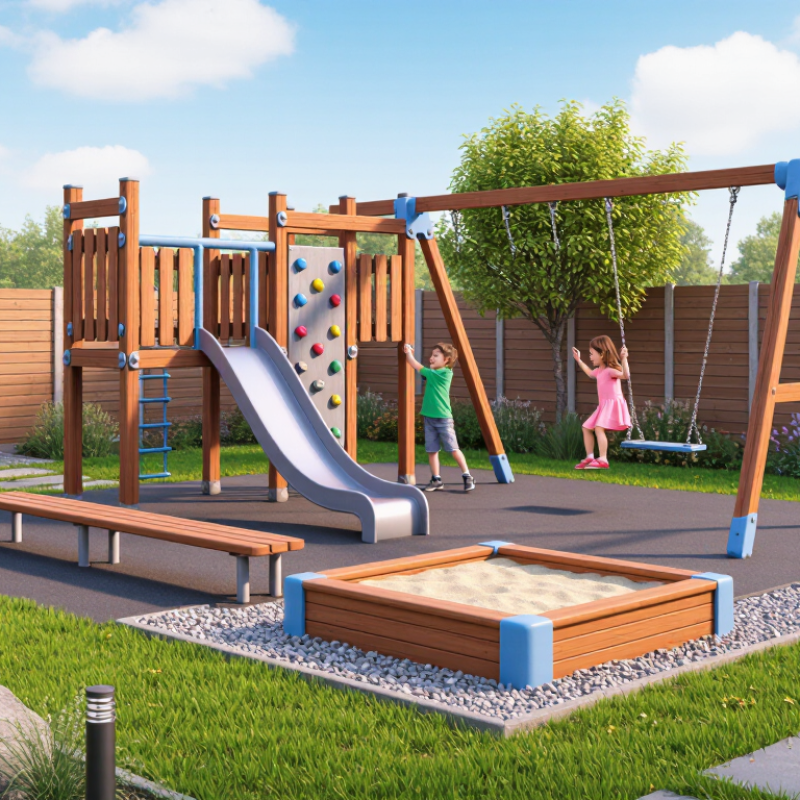
Choosing Garden Play equipment in 2026 requires more than selecting the brightest slide or largest climbing frame. Families and schools now expect safe design, durable materials, inclusive access, and meaningful physical activity. The best choice should match children’s ages, abilities, confidence levels, and available garden space. Measure carefully. A compact garden still needs clear fall zones, stable ground, and enough room for adults to supervise.

Tim Gill, an independent play researcher and author, says, “Children need to experience risk in order to learn how to manage it.” This idea matters when comparing swings, balance beams, sand areas, and climbing equipment. Responsible Garden Play should not remove every challenge. It should provide manageable difficulty, visible safety features, and opportunities for children to make decisions. Equipment should meet relevant safety standards, include secure fixings, and use materials suited to local weather. Wooden surfaces need regular inspection. Metal parts can become extremely hot.

Real experience often changes the buying decision. A large play tower may look impressive, yet it can overwhelm younger children and dominate a small garden. A modest climbing structure may encourage longer, more imaginative play. That sounds obvious, but many buyers overlook it. I would also question marketing promises about “maintenance-free” products. No outdoor equipment is entirely maintenance-free. Check bolts, cracks, drainage, surfacing, and fading throughout the year. Consider replacement parts before purchasing. The safest choice is not always the most expensive one. It is the product that fits the children, the space, and the people responsible for its care.

How to Choose Garden Play Equipment in 2026?

Define Your Garden Space, Users, and Play Goals

How to Choose Garden Play Equipment in 2026?

Define your garden space before choosing equipment. Measure the usable area, not the whole yard. Note slopes, tree roots, fences, windows, and afternoon shade. Leave clear fall zones around climbing and swinging equipment. The U.S. Consumer Product Safety Commission reports that playground injuries send more than 200,000 children to emergency departments annually. That figure makes spacing a safety decision, not a decoration choice. Check the ground after rain, too. Soil can become unexpectedly soft.

Identify who will use the equipment. A toddler needs low steps, wide grips, and short climbing routes. Older children may need balance challenges, movement, and imaginative space. The Outdoor Foundation’s 2024 Outdoor Participation Trends Report recorded 175.8 million U.S. outdoor recreation participants in 2023. Garden play can support that wider habit when equipment encourages active, repeat use. Ask practical questions: Can two children play without collisions? Can an adult supervise from the kitchen? Is the equipment still useful after one child grows taller?

Define the play goal before buying. Choose movement for daily exercise, sensory features for exploration, or open-ended structures for creative games. Do not overfill the garden. I once treated more equipment as better value; it only reduced running space. That was a poor assumption. The best layout may look unfinished, but it should feel calm, visible, and adaptable. Recheck the space each season. Children change faster than equipment.

Compare Equipment Types, Features, and Developmental Benefits

How to Choose Garden Play Equipment in 2026?

Choosing garden play equipment starts with development, not appearance. Climbers build strength, coordination, and risk awareness. Swings support balance and body control through repeated movement. Balance beams encourage focus and careful foot placement. Sand and water tables develop sensory exploration, language, and cooperative play. Loose parts can be valuable, too. Children often create richer games with simple crates, ropes, and fabric.

The World Health Organization recommends at least 180 minutes of daily physical activity for children aged three to four, including 60 minutes of moderate-to-vigorous movement (WHO, 2019). Equipment should therefore offer varied intensity, not just one exciting feature. Look for adjustable challenges, clear age guidance, rounded edges, stable anchors, and impact-absorbing surfacing. The U.S. Consumer Product Safety Commission’s Public Playground Safety Handbook highlights fall protection, entrapment prevention, and regular inspection as essential controls (CPSC, 2023). Check bolts, cracks, standing water, and worn surfaces every week.

I once focused too heavily on climbing height. That was a mistake. Younger children needed lower platforms and wider grips. A better garden mixes challenge with easy entry points. Leave enough clearance between moving equipment. Keep sightlines open from the usual seating area. WHO also links active play with physical, cognitive, and social development, but equipment alone cannot guarantee these outcomes. Adult attention still matters. Children may ignore the expensive feature and spend twenty minutes moving stones. That is not failure. It may be the most imaginative play available.

How to Choose Garden Play Equipment in 2026?

Compare equipment types, practical features, and developmental benefits.

How to read the chart: Each score uses a transparent 1–5 planning scale based on the variety of movements and play experiences the equipment typically supports. Combine several equipment types to provide a balanced mix of climbing, balance, coordination, sensory, creative, and social play.
Swings: balance, core control, rhythm, and vestibular movement.
Slides: climbing practice, spatial awareness, balance, and confidence.
Climbers: grip strength, upper-body control, planning, and coordination.
Sand areas: fine-motor activity, sensory exploration, creativity, and cooperation.
Trampolines: dynamic balance, coordination, leg strength, and active movement.

Scores are comparative planning values rather than clinical measurements. Always check age suitability, fall zones, supervision needs, and applicable playground-safety requirements.

Check Safety Standards, Materials, and Age Suitability

When choosing garden play equipment in 2026, start with safety standards, not appearance. Check that the product carries current, traceable compliance information for your region. Look for impact-absorbing surfacing, rounded edges, secure fasteners, and guarded gaps. A smooth finish is not enough. Inspect welds, bolts, and moving joints by hand. The instructions should explain installation, fall zones, maintenance, and weight limits. If these details are vague, pause before buying. Attractive equipment can still hide poor engineering.

Tips: Measure the full fall zone with a tape measure. Keep hard paving, fences, ponds, and tree roots outside it. Test ladders for wobble and slides for sharp joins. Check drainage after rain. Water often reveals problems. Ask the installer which standard was used and when it was assessed. Photograph the assembly and keep the manual. This small record helps when parts loosen or children grow.

Age suitability should match real behavior, not only the label. Toddlers need low platforms, short steps, and enclosed climbing areas. Older children may need challenge, but height should increase gradually. Separate active zones from quiet spaces to reduce collisions. Choose materials for the local climate. Treated timber needs regular checks, while metal may become dangerously hot in strong sun. Recycled plastic can resist moisture, yet it may fade or crack. I used to focus too much on size. I now check supervision, weather, and changing skills first. That judgment is not perfect, so review the equipment every season.

How to Choose Garden Play Equipment in 2026? - Check Safety Standards, Materials, and Age Suitability

A practical comparison of common garden play equipment, safety requirements, materials, age suitability, and installation considerations.

Equipment Type Typical Age Suitability Main Developmental Benefit Key Safety Risks Recommended Materials Important Safety Checks Protective Surfacing Relevant Standards or Guidance Overall Risk Priority
Low Platform or Play Tower Usually suitable from approximately 2 years when the platform is low and access is easy.
Higher towers should be selected only for older children according to the manufacturer’s age and height limits.
Climbing, balance, coordination, spatial awareness, and imaginative play. Falls from elevated platforms, entrapment openings, sharp edges, unstable foundations, and unsafe access points. Pressure-treated or naturally durable timber, powder-coated steel, UV-stabilised plastic, and corrosion-resistant fasteners. Check guardrails, barriers, handgrips, platform strength, bolt covers, drainage, ground anchoring, and openings that could trap the head or neck. Use impact-absorbing surfacing beneath and around elevated areas. Grass and ordinary soil should not be treated as reliable protective surfacing. ASTM F1148 for residential play equipment; EN 71-8 and ISO 8124-4 may be relevant for domestic activity toys. Verify the current edition and local requirements. High
Slide Low, short slides may suit children from about 2 years. Taller or faster slides require greater coordination and should follow the stated age range. Gross-motor development, body control, confidence, and turn-taking. Falls from the platform, collisions at the exit, hot surfaces, clothing or drawstring entanglement, and slippery or damaged surfaces. UV-resistant rotational-moulded plastic or smooth, sealed timber with rounded edges. Metal slides require careful heat management. Ensure the slide is firmly anchored, has a secure entry platform and handrails, contains no protruding fasteners, and has a clear exit area. Install impact-absorbing material at the exit and below the fall area. Keep the landing zone free from stones, roots, toys, and hard edging. ASTM F1148, EN 71-8, and ISO 8124-4 can apply depending on product type and market. Public installations may also be assessed under EN 1176. High
Swing Set Bucket or enclosed seats may suit younger toddlers when specifically designed for them. Flat seats generally require better balance and close supervision. Balance, rhythm, coordination, core strength, and spatial awareness. Impact from moving seats, falls, structural failure, pinching, entanglement, and inadequate clearance. Galvanised or powder-coated steel, treated timber, UV-resistant ropes, and durable moulded seats with smooth surfaces. Check beam stability, anchor points, chain or rope wear, seat condition, connector security, spacing between seats, and clearance from fences or walls. A generous impact-absorbing zone is essential beneath and around the swing’s full travel path. Do not place swings over concrete, paving, or exposed roots. ASTM F1148 for residential equipment; ASTM F1487 and EN 1176 are primarily associated with public playground equipment and should not be confused with home-use requirements. High
Climbing Frame or Geometric Climber Low, simple climbing structures may suit children from approximately 2 years. More complex frames are better for older, more capable climbers. Strength, balance, problem-solving, grip development, and risk assessment. Falls, finger or limb entrapment, unstable components, worn ropes, and climbing beyond the child’s ability. Smooth, splinter-free timber, coated metal, impact-resistant plastic, and ropes designed for outdoor use. Check grip diameter, platform edges, fasteners, rope termination, structural movement, splinters, corrosion, and fall height. Use an impact-absorbing surface over the complete fall zone. Loose-fill materials require regular raking and replenishment to maintain depth. ASTM F1148 is relevant to many residential systems; EN 71-8 and ISO 8124-4 may apply to domestic activity toys. Confirm the product classification. High
Balance Beam or Stepping Pods Low balance equipment may suit children from about 2 years. Higher beams should be reserved for children with more advanced balance skills. Balance, coordination, concentration, and controlled movement. Trips, falls, unstable supports, slippery surfaces, and hard landing areas. Rounded, sealed timber, textured plastic, or coated metal with weather-resistant feet and stable supports. Check that components do not rock excessively, surfaces remain slip-resistant when wet, edges are rounded, and the structure cannot rotate unexpectedly. For low equipment, well-maintained grass may reduce minor impact but is not equivalent to certified impact-absorbing surfacing. Use safer surfacing as height increases. EN 71-8 and ISO 8124-4 may be relevant for domestic activity toys. Use local playground guidance where the equipment is installed in a shared or public area. Medium
Spring Rocker or Seesaw Choose enclosed or low-motion designs for younger children. Traditional seesaws are generally more suitable for children who can follow instructions and control their movement. Balance, cooperation, body control, and social interaction. Pinching, crushing at pivot points, falls, sudden movement, tipping, and collisions with nearby children. Powder-coated steel springs, moulded plastic seats, sealed timber handles, and impact-resistant protective covers. Inspect pivot guards, spring covers, handles, seats, anchor points, stop mechanisms, and the distance from other play equipment. Use impact-absorbing surfacing around the complete movement and fall area, especially where the equipment has a raised seat. ASTM F1148 may apply to residential products. Public-use seesaws and rockers are generally evaluated against public playground standards such as EN 1176 or ASTM F1487. High
Sand and Water Table Commonly suitable from approximately 18 months to 5 years with continuous supervision and age-appropriate accessories. Sensory exploration, fine-motor skills, language, creativity, and early science learning. Choking on small accessories, contaminated water or sand, drowning risk in deep containers, slips, and sharp or broken parts. Food-contact-suitable plastic where applicable, smooth sealed timber, stainless steel, and rust-resistant fittings. Use shallow water only, empty and clean containers after use, inspect for cracks, avoid accessible drainage holes, and keep small parts away from children under 3. A stable, slip-resistant ground surface is more important than a fall surface. Avoid placing the table on uneven paving or beside open drains. EN 71 toy safety requirements and ISO 8124 series may be relevant. Small parts and intended age grading should be checked carefully. Medium
Outdoor Playhouse Often suitable from approximately 2 years, provided doors, windows, and interior spaces are designed for the child’s age. Imaginative play, communication, independence, and social development. Entrapment, trapped fingers, tipping, sharp edges, poor ventilation, hot interiors, and unsafe climbing on the roof. Smooth treated timber, durable plastic panels, and non-shattering glazing alternatives such as suitable polycarbonate. Check ventilation, door movement, finger-safe hinges, window openings, roof strength, anchoring, splinters, and visibility from the supervising area. Install on level, stable ground. If the roof or raised floor can be climbed, provide appropriate impact protection below the potential fall area. EN 71-8 and ISO 8124-4 may cover domestic activity toys. Residential structures should also be checked against local building and anchoring requirements. Medium
Trampoline Use only when the child can follow safety instructions. Many safety organisations discourage use by very young children; follow the product’s specific age limit. Dynamic balance, coordination, body control, and physical activity. Falls, collisions, awkward landings, frame impact, trapped limbs, unsafe ladders, and use by multiple children at once. UV-resistant jumping mat, weather-resistant frame, rust-resistant steel, and a fully enclosed safety net with padded frame protection. Check frame, springs or elastic connectors, mat, net, padding, anchor system, ladder removal, maximum user weight, and condition after storms. Place on level grass or another manufacturer-approved surface with clear overhead and lateral space. Never position it beside walls, fences, trees, or hard objects. EN 71-14 covers domestic trampolines in the European standards system. Product instructions, supervision rules, and local consumer-safety requirements remain essential. High
Ride-On Toy or Pedal Vehicle Select by the child’s height, weight, coordination, and ability to stop or steer. Push ride-ons may suit younger toddlers; pedal vehicles generally suit older children. Leg strength, steering, coordination, independence, and spatial awareness. Falls, collisions, tipping, trapping fingers, access to roads or driveways, and small detachable parts. Impact-resistant plastic, smooth sealed timber, non-toxic coatings, and low-maintenance wheels with secure axles. Check steering limits, brakes where fitted, wheel security, seat stability, pinch points, visibility, and whether the child’s feet reach the ground or pedals. Use on a flat, traffic-free, slip-resistant surface. Avoid slopes, steps, swimming pools, driveways, and areas shared with moving vehicles. Relevant toy safety requirements may include EN 71 and ISO 8124. Check whether the product is classified as a ride-on toy, wheeled toy, or sports equipment. Medium
Inflatable Bouncer or Small Inflatable Play Unit Use only within the stated age, height, weight, and user-number limits. Separate younger and older children when the instructions require it. Active movement, balance, jumping, and cooperative play. Falls from the entrance or wall, collisions, deflation, wind movement, overcrowding, and unsafe anchoring. Reinforced, tear-resistant PVC or equivalent outdoor-rated fabric with protected seams and secure anchoring points. Check blower operation, air pressure, anchor points, seams, entrance ramp, weather conditions, electrical protection, and maximum occupancy. Set up on level ground free from stones and sharp objects. Use the manufacturer’s recommended anchoring and clearance zones. Applicable requirements vary by jurisdiction and product category. Check the current consumer-product standard, electrical requirements, and the complete operating instructions. High
Selection notes for 2026:
  • Always follow the product’s stated age, height, weight, user-number, installation, and supervision limits; these limits take priority over a general age guide.
  • ASTM F1148 is intended for residential playground equipment, while ASTM F1487 and EN 1176 are principally associated with public playground equipment. Confirm which standard applies to the product and location.
  • EN 71-8 and ISO 8124-4 relate to activity toys or domestic-use activity equipment in relevant markets. Standards are not a substitute for proper installation, inspection, supervision, and maintenance.
  • For impact protection, choose surfacing tested for the equipment’s fall height where required. Loose-fill surfaces can become displaced and need regular inspection and replenishment.
  • Inspect equipment before every use for loose fasteners, corrosion, cracks, splinters, damaged ropes, worn padding, sharp edges, and water accumulation.

Plan Installation, Accessibility, Maintenance, and Weather Protection

Choosing garden play equipment in 2026 begins with the ground beneath it. Measure the available space before selecting slides, swings, or climbing frames. A level area reduces movement and helps protective surfacing remain effective. Keep clear space around every activity zone. I once underestimated this distance, and a narrow passage made supervision difficult. A qualified installer should follow the equipment instructions and check anchoring carefully. Leave room for future repairs.

Accessibility should shape the layout, not appear as an afterthought. Choose equipment with varied heights, easy-grip rails, and activities that do not require climbing. A firm, slip-resistant path can connect the entrance with seating and play areas. Place benches where adults can see the whole garden without blocking movement. Check whether children using mobility aids can reach at least some play features independently. Ask them directly. Their feedback may reveal problems adults miss.

Maintenance starts with a simple inspection routine. Check bolts, chains, handles, platforms, and surfacing every week during heavy use. Look for sharp edges, loose parts, standing water, and cracked materials. Tighten carefully. Wooden components need protection from moisture and regular checks for splinters. Metal surfaces can become extremely hot under strong sunlight, so shade matters. In rainy or windy regions, secure removable items and improve drainage around posts. Protective covers may help, but trapped moisture can cause hidden damage. I still prefer airflow and frequent checks over relying on a cover alone.

Set a Budget and Make the Final Equipment Choice

How to Choose Garden Play Equipment in 2026?

Set a realistic budget before comparing garden play equipment. Include delivery, ground preparation, installation, and future repairs. A low purchase price can become expensive after several missing costs. Measure the play area carefully, leaving clear space around swings and slides. Check the ground for roots, drains, loose paving, and poor drainage. Children need room to move safely.

Decide which features matter most for your family. A compact climbing frame may suit a small garden, while a larger set needs stronger foundations. Check the recommended age range, maximum user weight, platform height, and available safety barriers. Look for clear assembly instructions and materials designed for outdoor weather. Current safety guidance should influence your choice, not attractive pictures alone. Ask whether replacement bolts, ropes, or panels are available.

Keep a small reserve in the budget. It helps cover unexpected ground work or damaged parts. I once underestimated installation time, and the equipment remained unused for several days. That was frustrating, but it changed my planning. Choose equipment that adults can inspect easily. Test moving parts, feel for sharp edges, and check that anchors stay firm after rain. A cheaper option may be sensible if it matches the children’s age and your maintenance ability. However, saving money should not mean accepting unstable frames or unclear instructions. Measure twice. Spend carefully.