What is an Outdoor Play Structure and Why is it Important for Children?
Outdoor play structures play a vital role in childhood development. According to Dr. Emily Johnson, an expert in child development, "Play structures are essential for building a healthy mind and body in children." These structures provide safe environments for kids to explore and engage in physical activity.
Outdoor play structures encourage social interaction and creativity. They foster teamwork and imaginative play, critical aspects of early childhood development. Children can climb, slide, and swing, promoting physical skills and emotional resilience. It’s important to recognize that not all spaces are created equal. Lack of proper training or materials might lead to inadequate designs.
Communities must address gaps in play structure availability. Some areas still lack safe and engaging play spaces. It’s a challenge that needs reflection and action. Ensuring access for all children can create well-rounded experiences. With thoughtful planning, every child can benefit from an outdoor play structure that supports their growth.
Definition of Outdoor Play Structure: Features and Types
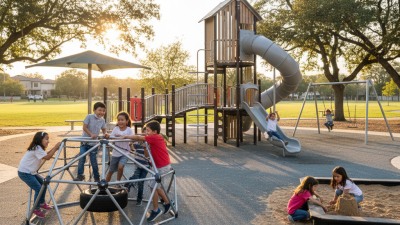
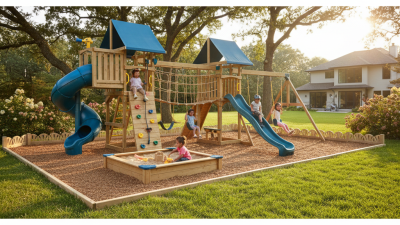
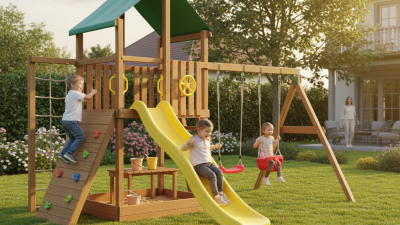
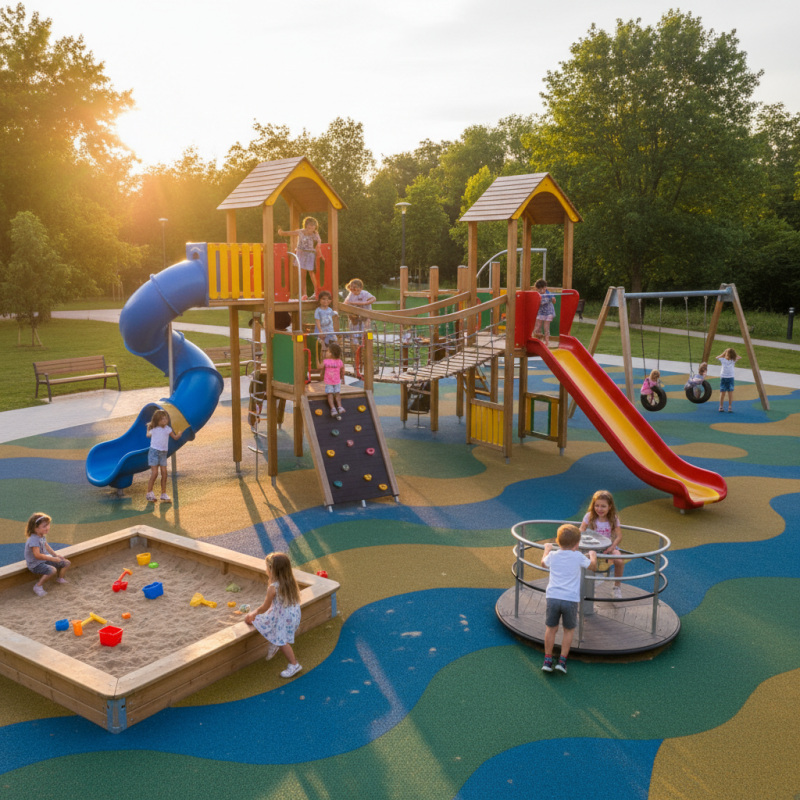
An outdoor play structure is a specially designed space for children to play outside. These structures can include swings, slides, climbing walls, and more. They promote physical activity, social interaction, and cognitive development. The American Academy of Pediatrics emphasizes the importance of outdoor play in fostering children’s growth. A study found that children who engage in outdoor play are 50% more likely to develop fine motor skills.
There are various types of outdoor play structures. Natural structures use wood and rocks, promoting creativity and imagination. Traditional playgrounds often feature metal and plastic equipment, while modern designs incorporate unique shapes and sensory elements. According to the National Association for the Education of Young Children (NAEYC), children involved in diverse outdoor play experiences develop better problem-solving skills. Each type offers unique benefits, yet not every playground is accessible or safe for all children.
In constructing these spaces, it is vital to consider safety standards and age appropriateness. Many playgrounds fail to provide sufficient shade or soft landing surfaces. Children may also struggle to engage with peers in poorly designed structures. Investing time in thoughtful design can help create environments that truly support children’s developmental needs.
The Importance of Outdoor Play Structures for Child Development
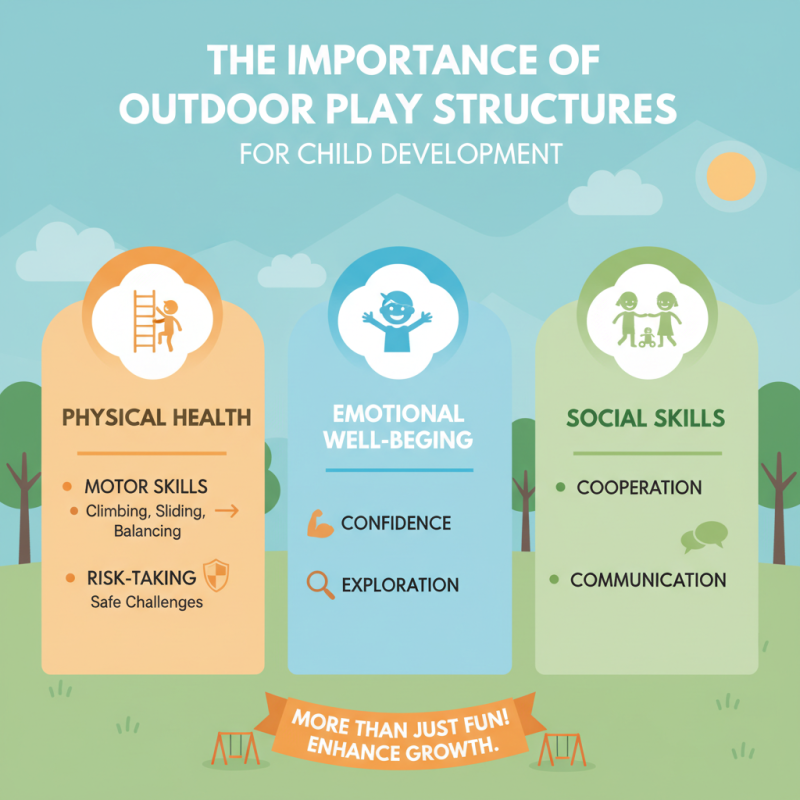
Outdoor play structures play a vital role in children's development. They are more than just fun. They stimulate physical health, emotional well-being, and social skills. Climbing, sliding, and balancing all enhance motor skills. Children learn to navigate their environment and take calculated risks. It's important for them to face challenges safely.
Social interactions thrive in these settings. Kids learn to cooperate and negotiate. They share equipment and resolve conflicts. Those moments are crucial for building friendships. Conflict resolution is a skill that often needs practice. Outdoor play structures provide that opportunity in a natural way. It is important not to overlook the role of unstructured play. Children need time to explore without adult direction.
Parents and educators must consider safety alongside creativity. A well-designed structure encourages imaginative play. Yet, it's easy to focus only on safety features. A balance must be struck. Embracing a bit of risk can lead to growth. Reflect on the types of play structures available. Are they diverse enough to inspire all children? Each child's needs are unique, and that challenge remains.
Benefits of Outdoor Play on Physical Health and Coordination
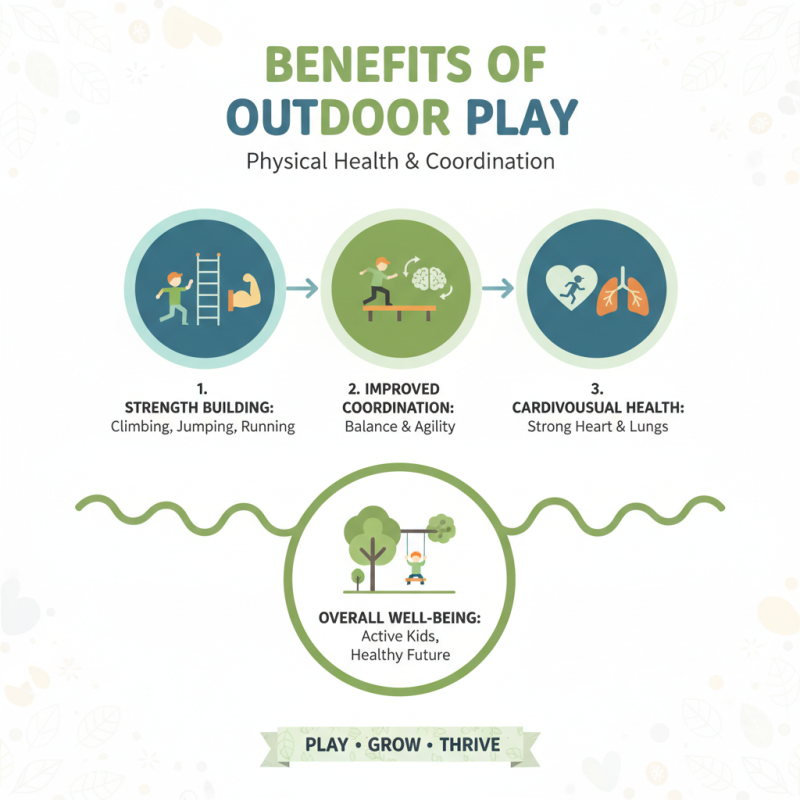
Outdoor play structures serve as vital tools for children's development. These play areas encourage kids to engage in physical activities, which are crucial for their overall health. When children climb, jump, and run, they build strength and coordination. This active play supports their heart and lung health, too.
Moreover, outdoor play enhances motor skills. Kids improve hand-eye coordination when using slides and swings. They develop balance by navigating different surfaces. These skills are essential as they grow and participate in sports or other physical activities. While outdoor play structures provide significant benefits, ensuring safety is paramount. Regular maintenance and supervision can reduce injuries, allowing children to play freely without worry.
Social Skills and Emotional Growth Through Outdoor Play Structures
Outdoor play structures are vital for children’s development. They provide a safe space for play, promoting physical activity and creativity. Children engage with their peers in these environments, leading to the development of social skills. Climbing, sliding, and swinging together encourages teamwork and communication. Kids learn to negotiate rules and take turns, which builds friendships.
Moreover, emotional growth happens through outdoor play. When children face challenges, like overcoming a fear of heights on a climbing wall, they develop resilience. Failing and trying again fosters a growth mindset. Each victory, however small, boosts their confidence. Outdoor play structures create an environment where kids can express emotions freely, whether it’s excitement, frustration, or joy.
Yet, challenges arise. Sometimes, children may struggle to integrate fully. Social dynamics can be tricky, and not every child feels included. These moments require reflection from caregivers and educators. Facilitating positive interactions is crucial. Recognizing and addressing social conflicts assists in developing empathy. Outdoor play structures thus serve a deeper purpose beyond mere fun; they are breeding grounds for essential life skills.
Importance of Outdoor Play Structures for Children's Development
Safety Considerations and Maintenance of Outdoor Play Equipment
Outdoor play structures are essential for children’s development. They promote physical activity and social skills. However, ensuring safety and proper maintenance can be challenging. Regular checks can prevent accidents and injuries.
Safety is paramount when it comes to outdoor play equipment. Inspect playgrounds frequently for loose bolts, sharp edges, or other hazards. Consider installing a soft surface under equipment. This reduces the risk of injury from falls. Additionally, pay attention to age-appropriate structures to ensure children play safely.
Tips: Always supervise children during play. Teach them about sharing and taking turns. Encourage them to explore safely, but also remind them about boundaries. Maintenance is equally important. Clean equipment regularly to prevent rust and wear. Replace damaged parts promptly to keep structures safe. These actions can extend the lifespan of play equipment.
What is an Outdoor Play Structure and Why is it Important for Children? - Safety Considerations and Maintenance of Outdoor Play Equipment
| Feature |
Importance |
Safety Considerations |
Maintenance Tips |
| Variety of Equipment |
Encourages different types of play. |
Regularly check for sharp edges. |
Inspect weekly for wear and tear. |
| Safety Surfacing |
Reduces injury risk during falls. |
Ensure surfacing is intact and adequate. |
Replace damaged surfacing promptly. |
| Age Appropriateness |
Ensures activities match children's abilities. |
Use equipment suited for specific age groups. |
Clean equipment regularly to prevent dirt build-up. |
| Supervision |
Essential for ensuring safe play. |
Always have adults supervising at playtime. |
Teach children safe play practices. |
| Community Engagement |
Strengthens social ties among families. |
Involve community in upkeep and safety checks. |
Organize regular community maintenance days. |
 +86-13901441113

 CONTACT NUMBER
 CONTACT NUMBER