+86-13901441113

Leave Your Message
-
CONTACT NUMBER
-
 CONTACT NUMBER
 -
 CONTACT NUMBER
Choosing Outdoor Playground Sets is not simply a matter of bright colors, low prices, or a spacious backyard. The right equipment must fit children’s ages, movement abilities, available space, and supervision needs. A climbing wall may excite a seven-year-old, yet overwhelm a toddler. A swing set may look sturdy, but weak anchoring can create serious hazards.
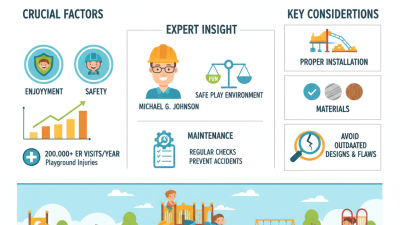
The U.S. Consumer Product Safety Commission reports more than 200,000 playground-related emergency-department injuries among children each year. Falls remain a major concern. The CPSC Public Playground Safety Handbook also emphasizes protective surfacing, safe spacing, guardrails, and regular maintenance. These details matter beneath the cheerful design.
Donna Thompson, a former director of the National Program for Playground Safety, has stated, “Safety is not about removing all risk; it is about managing risk.” That principle should guide every purchase. Children need challenge, but adults must control avoidable danger. The best Outdoor Playground Sets balance adventure with predictable protection.
This guide presents seven practical tips for comparing materials, layouts, age ratings, installation methods, surfacing, accessibility, and long-term upkeep. Look closely. Feel the edges. Check the bolts. Ask whether replacement parts remain available after several seasons.
Some decisions will still feel uncertain. That is normal. A beautiful set can fail in a small yard. A cheaper model can become expensive after repairs. Careful evaluation, supported by CPSC guidance, ASTM standards, and manufacturer documentation, creates a more dependable choice for active children.
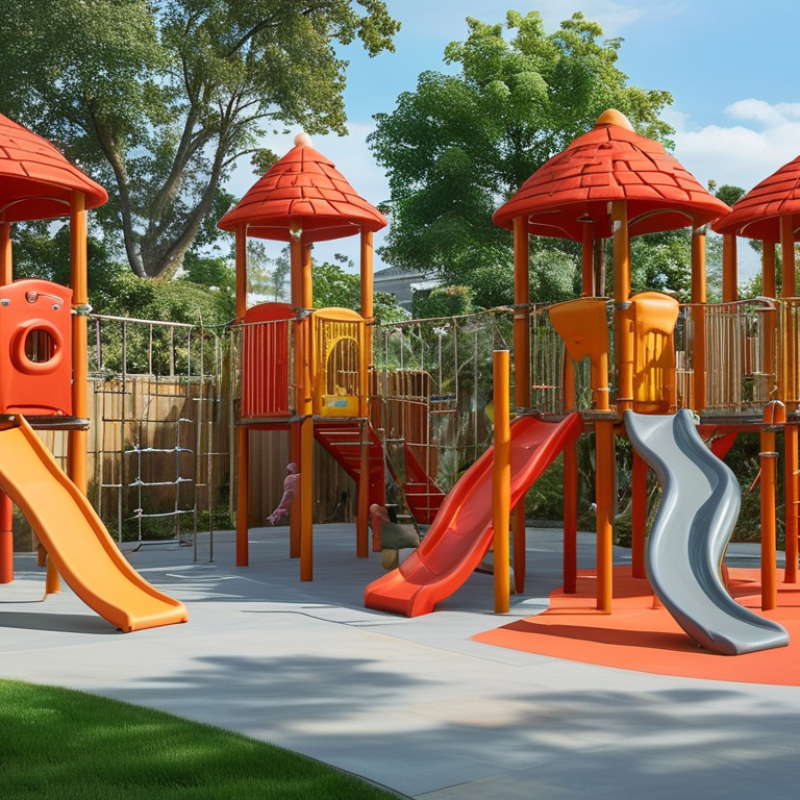
7 Tips for Choosing Outdoor Playground Sets?
Define Age-Appropriate Play: Match Features to ASTM F1487 Age Groups
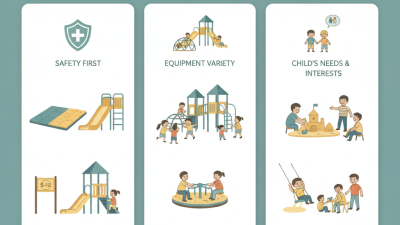
Age matters more than bright colors. ASTM F1487 separates public playground equipment into two main groups: ages 2–5 and 5–12. For toddlers, choose low platforms, short slides, full-height barriers, and easy-grip handrails. Avoid challenging climbers with large openings or steep transitions. CPSC data reports that more than 200,000 children receive emergency treatment for playground injuries each year, with falls among the leading causes. That statistic makes height and fall zones practical decisions, not decoration.
For ages 5–12, consider higher platforms, overhead events, rotating components, and more complex climbing paths. Confirm that each feature suits the child’s developmental ability, not merely the label on the catalog page. Check guardrails, entrapment risks, surfacing depth, and the required use zone. The CPSC Public Playground Safety Handbook recommends impact-attenuating surfacing beneath and around elevated equipment. Keep younger children away from fast-moving or high-balance features. Separate play areas can reduce collisions. I have seen attractive layouts fail when age groups share one narrow exit. Recheck the plan at child height. A small detail can change everything. Also review local accessibility and safety requirements before installation, because ASTM guidance is not a substitute for site-specific compliance.
Use the ASTM F1487 age-group framework as a starting point, then confirm the complete equipment design, use zones, protective surfacing, accessibility, installation, and maintenance requirements for the intended site.
| Tip | ASTM F1487 Age Group | Primary Play Goal | Age-Appropriate Features | Selection and Safety Checks | Best-Fit Site Use |
|---|---|---|---|---|---|
| 1 |
Toddlers: 6–23 months Early walking and supported play |
Build balance, grasping, crawling, climbing confidence, and basic social interaction. | Low-height platforms, ramps, crawl-through panels, handrails, short stairs, gentle sensory panels, and ground-level activities. | Check: The layout provides stable handholds, limited climbing exposure, clear sightlines, and no features intended for older children that could encourage unsafe access. | Child-care areas and dedicated toddler play zones with close adult supervision. |
| 2 |
Preschool: 2–5 years Developing coordination and independence |
Strengthen climbing, sliding, balancing, swinging, and imaginative play skills. | Small climbers, accessible ramps, low slides, spring riders, crawl tunnels, activity panels, and swings designed for the intended age group. | Check: Entrances, platforms, barriers, openings, steps, and transfer points are suitable for preschool-sized users and are separated from higher-risk school-age features. | Preschool playgrounds, early-learning centers, and mixed-use parks with a separate younger-child zone. |
| 3 |
School-age: 5–12 years Advanced movement and challenge |
Provide progressively challenging physical play, problem-solving, cooperation, and risk-management opportunities. | Higher and more complex climbers, overhead events, varied slides, track rides, balance elements, net structures, and group-oriented play components. | Check: Challenge levels are clearly differentiated, fall heights and use zones are documented, and the equipment is not placed where younger children must cross active circulation paths. | Public parks, schools, community recreation areas, and larger shared playgrounds. |
| 4 |
Match the whole set Do not choose by one feature alone |
Create a balanced play experience instead of purchasing equipment that is attractive but unsuitable for the users. | Combine active movement, quiet or sensory play, social spaces, imaginative play, and accessible ground-level activities. | Check: Every component has an intended age range, and the complete structure does not mix incompatible access routes or challenge levels without appropriate separation. | Sites serving multiple age groups, especially when toddler, preschool, and school-age areas can be visibly separated. |
| 5 |
All intended age groups Protective surfacing and fall planning |
Reduce injury severity associated with falls from elevated play equipment. | Impact-attenuating surfacing selected for the equipment’s documented fall characteristics, site drainage, climate, and maintenance conditions. | Check: The protective surface extends throughout the required use zones, remains at the required depth or performance level, and is inspected for displacement, compaction, wear, and trip hazards. | Every playground with elevated platforms, climbers, slides, swings, or other equipment where a fall can occur. |
| 6 |
All intended age groups Accessibility and supervision |
Allow children with different abilities to reach, use, and enjoy meaningful parts of the play environment. | Firm and stable accessible routes, transfer options, ground-level play, varied activity heights, seating, shade, and clear caregiver viewing areas. | Check: Accessible routes connect key play opportunities, circulation paths do not conflict with swing or slide exits, and caregivers can see children from multiple locations. | Schools, public parks, inclusive community spaces, and sites with diverse mobility or sensory needs. |
| 7 |
All intended age groups Installation and long-term upkeep |
Keep the playground safe and usable after installation, seasonal changes, and normal wear. | Durable materials, secure anchoring, replaceable wear components, smooth transitions, drainage planning, and an inspection-friendly layout. | Check: Obtain installation instructions, age-use information, fall-height data, maintenance procedures, and inspection records; inspect fasteners, welds, platforms, barriers, surfacing, and moving parts regularly. | All outdoor playground projects, particularly high-use public facilities and school environments. |
Planning note: ASTM F1487 commonly organizes public playground equipment around three user groups: toddlers aged 6–23 months, preschool-age children aged 2–5 years, and school-age children aged 5–12 years. Confirm the current applicable edition of ASTM F1487, local building and accessibility requirements, manufacturer installation instructions, and the site’s inspection schedule before purchase or installation.