+86-13901441113

Leave Your Message
-
CONTACT NUMBER
-
 CONTACT NUMBER
 -
 CONTACT NUMBER
The 2026 market for Outdoor Playground Sets is becoming more demanding. Wholesale buyers now need more than bright colors and attractive catalog photos. They need equipment that supports active play, fits different site sizes, and remains practical after years of use.
Dr. Joe Frost, a respected playground researcher, describes play as “the business of childhood.” That idea matters when selecting commercial sets. A strong design should invite climbing, sliding, balancing, swinging, and imaginative group play. It should also allow supervisors to see children clearly from several angles.
This guide examines the best Outdoor Playground Sets for wholesale purchasing in 2026. It considers material quality, age range, installation requirements, maintenance needs, and long-term value. Powder-coated steel may offer dependable strength, while high-quality plastic can reduce sharp edges and simplify cleaning. However, no material is perfect. Coastal air can accelerate corrosion. Direct sunlight can fade surfaces and heat metal components.
Practical details often decide whether a purchase succeeds. Buyers should check platform heights, fall zones, anchoring systems, replacement-part access, and available warranty support. A set that looks affordable may become expensive if shipping, assembly, or repairs are overlooked.
The recommendations also reflect real purchasing conditions. Budgets differ. Outdoor spaces differ. Even a well-designed set may perform poorly when overcrowded or installed on unsuitable ground. Wholesale buyers should compare supplier documentation carefully and request clear specifications before ordering. Safety should lead the decision, but play value must remain visible. A playground should feel inviting, not merely compliant.
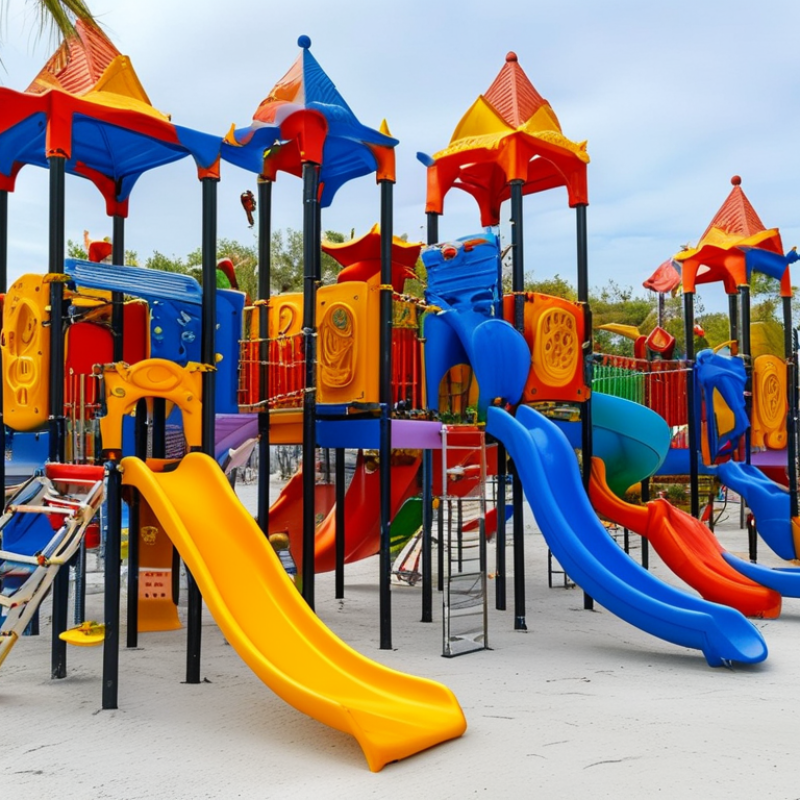
2026 Best Outdoor Playground Sets for Wholesale Buyers
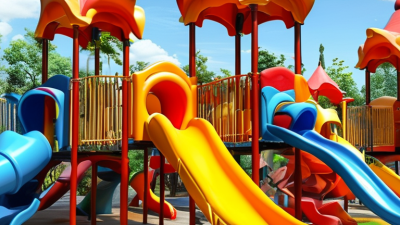
Outdoor playground sets generally fall into modular climbers, swing-and-slide units, fitness stations, and inclusive sensory structures. Modular systems combine platforms, ladders, tunnels, and slides. They suit schools with limited space. Swing sets need reinforced beams, pinch-point protection, and clear swing arcs. Small details matter. Inclusive units add transfer platforms, ramps, ground-level play panels, and sensory features. These elements support children with different mobility and communication needs.
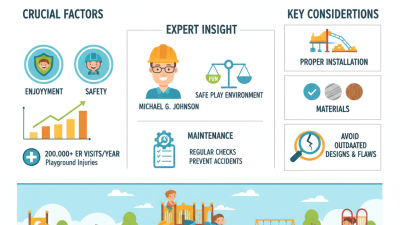
Grand View Research’s 2024 market analysis projects a 5.1% compound annual growth rate for the global playground equipment market through 2030. That growth increases demand for durable, adaptable products. Yet demand alone should not guide purchasing. The U.S. Consumer Product Safety Commission reports roughly 200,000 annual emergency-department visits linked to playground injuries, with falls as a major cause. Buyers should check impact-attenuating surfacing, fall zones, guardrails, and entrapment risks. ASTM F1487 and EN 1176 offer useful technical benchmarks, but local requirements still need review.
For wholesale orders, powder-coated steel offers strength, while treated timber gives a warmer appearance. High-density polyethylene panels resist moisture and frequent cleaning. Ask suppliers for UV, corrosion, load, and surfacing test records. Confirm replacement-part availability, installation drawings, drainage details, and warranty limits. A low purchase price can hide difficult maintenance. I would also question oversized sets for small sites; unused platforms become expensive clutter. Safety documentation should be specific, current, and traceable to each product configuration.
| Outdoor Playground Set Type | Best Application | Typical Age Range | Main Play Elements | Typical Footprint | Typical User Capacity | Common Materials | Main Features | Wholesale Buying Considerations |
|---|---|---|---|---|---|---|---|---|
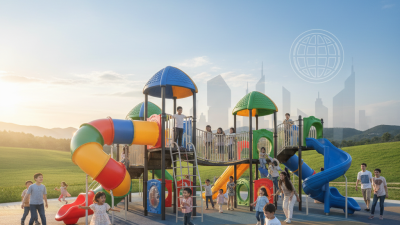
| Multi-Activity Modular Set | Schools, public parks, residential developments and family entertainment areas | 2–5 years or 5–12 years, depending on the configuration | Platforms Slides Climbers Bridges | Approximately 6 × 5 m to 12 × 10 m | About 15–60 children | Galvanized or powder-coated steel, aluminum, HDPE panels, molded plastic and stainless steel hardware | Combines several play activities in one structure; can often be expanded with additional modules; offers good visual impact for large sites | Confirm age separation, fall zones, anchoring method, spare-part availability, installation requirements and compliance with the destination market’s playground standard |
| Compact Residential Playset | Private gardens, housing communities, small hospitality properties and childcare yards | 2–8 years | Small Platform Short Slide Climbing Wall Play Panel | Approximately 3 × 3 m to 5 × 4 m | About 4–15 children | Powder-coated steel or treated timber, HDPE, molded plastic and coated fasteners | Space-efficient design, lower overall height, simple activity combination and easier placement in smaller outdoor areas | Prioritize compact packaging, clear assembly instructions, residential anchoring options, rounded edges and low-maintenance finishes |
| Inclusive Playground Set | Public parks, schools, municipalities and community recreation areas | 2–12 years, with activities selected for different ability levels | Transfer Platform Wide Ramps Ground-Level Panels Accessible Spinner | Approximately 8 × 7 m to 15 × 12 m | About 15–50 children | Powder-coated metal, HDPE, rubber or composite surfacing and corrosion-resistant hardware | Provides ground-level and elevated activities; may include transfer systems, wide access routes and sensory play features | Check accessible route dimensions, transfer clearances, surfacing transitions, user guidance, local accessibility rules and the availability of replacement components |
| Swings and Swing Bay | Standalone play zones, schools, parks and mixed-use playgrounds | Typically 2–12 years, using age-appropriate seats | Belt Seats Bucket Seats Inclusive Seats | Approximately 3 × 4 m for a two-seat bay; larger space required for additional bays | Usually 2–8 active users per bay | Galvanized or powder-coated steel, aluminum or timber posts, polymer seats and coated chains | High repeat-play value; seat options can serve toddlers, older children and some users with additional support needs | Allow for front, rear and side use zones; verify seat compatibility, chain protection, beam loading, anchoring and surfacing depth |
| Slide Tower Set | Playgrounds requiring a strong focal element and varied descent activities | 2–5 years for low slides; 5–12 years for taller slides | Straight Slide Wave Slide Tube Slide Stairs or Ramp | Approximately 4 × 4 m to 8 × 6 m, excluding required use zones | About 6–25 children | Rotomolded plastic, stainless steel or coated steel, HDPE barriers and galvanized structural members | Offers different slide profiles and access methods; can be integrated into larger modular systems | Compare platform height, slide exit location, guardrails, climbing access, UV resistance, container dimensions and installation clearance |
| Climbing and Adventure Set | Schools, parks, campsites and activity-focused recreation areas | 5–12 years, with lower versions available for younger children | Climbing Net Rope Ladder Cargo Net Climbing Wall | Approximately 5 × 5 m to 12 × 8 m | About 10–35 children | Galvanized steel, UV-stabilized rope, HDPE or fiberglass panels and corrosion-resistant fittings | Encourages upper-body strength, coordination, balance and risk-assessment skills through active climbing challenges | Check rope specifications, connection points, entrapment risks, impact-attenuating surfacing, inspection access and maximum fall height |
| Balance and Coordination Circuit | Schools, therapy-oriented recreation spaces, parks and obstacle-play areas | 3–12 years, depending on height and challenge level | Stepping Pods Balance Beam Log Walk Wobble Bridge | Approximately 5 × 3 m to 15 × 5 m | About 8–30 children | Powder-coated steel, treated timber, molded plastic, rubber components and textured walking surfaces | Supports balance, coordination and movement planning; layouts can be linear, circular or connected to other play equipment | Review fall height, spacing between elements, surface texture, drainage, modularity and the possibility of creating multiple difficulty levels |
| Preschool Sensory Play Set | Early-learning centers, childcare facilities, family parks and indoor-outdoor preschool areas | 2–5 years | Music Panels Talk Tubes Sand Tables Role-Play Panels | Approximately 4 × 3 m to 8 × 6 m | About 8–25 children | HDPE, stainless steel, rotomolded plastic, coated steel and sealed timber components | Provides visual, tactile, auditory and imaginative play; generally uses low-height activities and easy-to-reach panels | Look for smooth cleanable surfaces, tamper-resistant fittings, drainage around sand or water features, rounded corners and simple supervision lines |
| Nature-Themed Timber Playset | Eco-themed parks, resorts, campsites, schools and landscape-sensitive projects | 3–12 years, depending on platform height and activities | Treehouse Platform Log Climber Rope Bridge Timber Slide | Approximately 6 × 5 m to 14 × 10 m | About 10–40 children | Engineered or treated timber, galvanized steel connectors, rope, HDPE and stainless steel hardware | Natural visual appearance, strong landscape integration and opportunities for imaginative and exploratory play | Confirm timber treatment documentation, moisture management, inspection intervals, surface splinter control, replacement policy and local climate suitability |
| Outdoor Fitness and Teen Activity Set | Community parks, schools, campuses, resorts and mixed-age recreation zones | Typically 8 years and above; some equipment is intended for adults | Pull-Up Bars Parallel Bars Agility Steps Stretching Stations | Approximately 8 × 5 m to 20 × 10 m | About 8–30 active users | Powder-coated or galvanized steel, stainless steel hardware, molded grips and impact-resistant panels | Supports strength, flexibility, agility and social activity; suitable for older children, teenagers and adults when correctly specified | Separate age groups where necessary; confirm load ratings, user instructions, equipment spacing, corrosion protection and inspection procedures |
| Water and Sand Play Set | Resorts, family parks, splash areas, childcare sites and hot-climate recreation spaces | 2–8 years, with supervision | Water Tables Sand Tables Channels Pumps | Approximately 5 × 4 m to 15 × 10 m | About 8–35 children | HDPE, stainless steel, fiberglass, rotomolded plastic and corrosion-resistant fittings | Encourages cooperative, sensory and STEM-oriented play; low-height layouts can support easy adult supervision | Plan drainage and water treatment carefully; check anti-slip surfaces, cleaning access, winterization, water-saving design and local health requirements |
| Spinning and Rocking Equipment Zone | Small parks, schools, residential communities and activity-mix upgrades | 3–12 years, according to the specific equipment | Spring Riders Rotating Platforms Merry-Go-Rounds Rockers | Approximately 4 × 4 m to 10 × 8 m | About 2–20 active users | Powder-coated steel, molded plastic, rubber seats and sealed bearings or springs | Adds motion-based play with relatively small equipment footprints; suitable for creating varied activity zones | Verify pinch-point protection, rotational speed control, moving-part maintenance, anchoring, surfacing and required clearance around each unit |